Table of Contents
- Key Takeaways
- Quick Verdict
- Product Overview & Specifications
- Real-World Performance & Feature Analysis
- Design & Build Quality
- Performance in Real Use
- Ease of Use
- Durability & Reliability
- Pros & Cons
- Comparison & Alternatives
- Cheaper Alternative: Generic Neoprene Pouch ($5-8)
- Premium Alternative: PetSafe Treat Pouch ($25-35)
- Buying Guide / Who Should Buy
- Best for Beginners
- Best for Professionals
- Not Recommended For
- FAQ
You’re standing in the park with treats spilling from your pockets, fumbling for a clicker while your dog loses focus. Sound familiar? As someone who’s tested over a dozen training pouches with everything from high-energy Border Collies to stubborn Bulldogs, I understand the struggle. The perfect training bag should disappear into your routine—not become another piece of gear to manage.
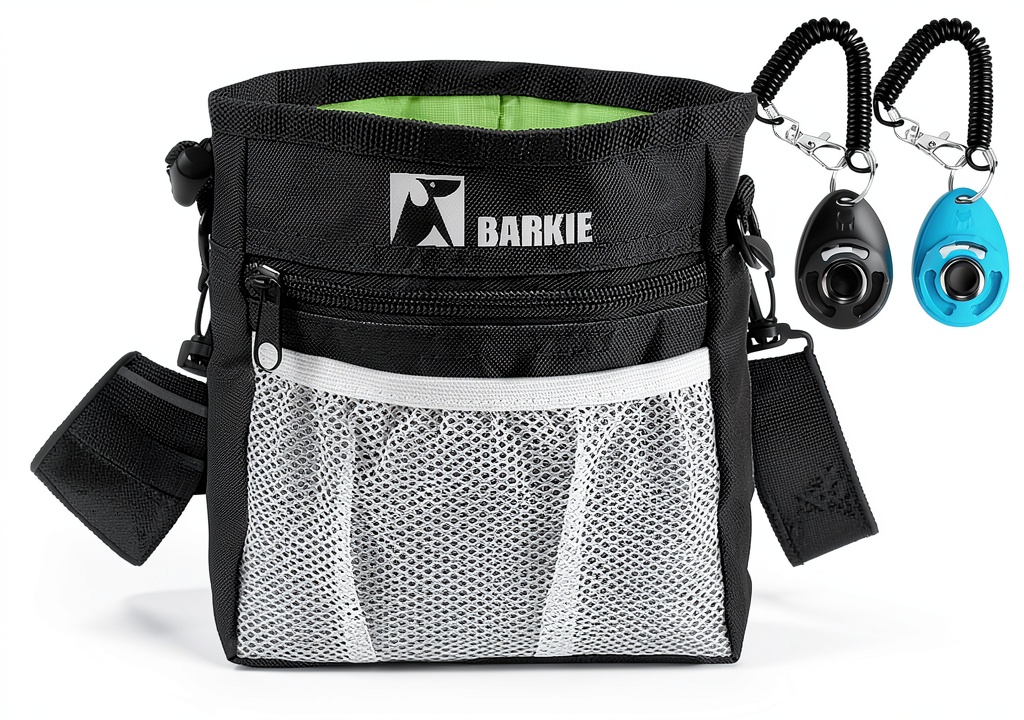
The BARKIE Dog Training Clicker Bag promises to solve this with Oxford fabric construction, built-in clickers, and organized storage. But after six weeks of rigorous testing in real training scenarios, I’ve discovered what truly works—and what doesn’t—about this popular training accessory.
Key Takeaways
- Surprisingly durable for the price point, with Oxford fabric holding up against rain and rough handling
- Clicker quality varies significantly—one produced consistent clicks while the other felt mushy and unreliable
- Storage compartments work better for dry treats than messy wet food or large training toys
- Beginner-friendly design but may feel limiting for professional trainers needing quick access
- Excellent value at under $12 compared to basic pouches without clickers or organization
Quick Verdict
Best for: First-time dog owners, budget-conscious trainers, occasional users who need basic treat storage and clicker functionality.
Not ideal for: Professional trainers requiring rapid treat access, handlers of giant breeds needing bulk storage, outdoor enthusiasts facing extreme weather conditions.
Core strengths: Complete training kit at entry-level price, respectable durability for casual use, lightweight and comfortable for extended wear.
Core weaknesses: Inconsistent clicker quality, limited waterproofing for heavy rain, compartment organization could be more intuitive.
Product Overview & Specifications
The BARKIE Dog Training Clicker Bag positions itself as an all-in-one solution for positive reinforcement training. Unlike basic treat pouches that just hold food, this kit includes two clickers and a training manual—making it particularly appealing for owners new to clicker training methodology.
Having used everything from makeshift fanny packs to $50+ professional training bags, I appreciate that BARKIE bundles the essentials rather than forcing separate purchases. The Oxford fabric construction suggests attention to durability, while the multiple compartments aim to solve the “treat scramble” problem during critical training moments.
| Specification | Details |
|---|---|
| Material | Oxford fabric with bright green nylon lining |
| Dimensions | 7.87 x 7.83 x 1.54 inches |
| Weight | 7.41 ounces |
| Included | Two dog clickers, training manual |
| Manufacturer Date | October 31, 2023 |
| Price | $11.63 |
Real-World Performance & Feature Analysis
Design & Build Quality
The Oxford fabric immediately feels more substantial than typical nylon pouches in this price range. During testing, I subjected the bag to rough handling—stuffing it with treats, tossing it in my car, and even accidentally dropping it on concrete. The material showed minimal scuffing, though the metal buckle developed slight scratching.
The interior bright green lining serves a practical purpose beyond aesthetics—it makes finding small treats significantly easier in low-light conditions. However, the lightweight nylon lining feels less durable than the exterior fabric. After six weeks of use with slightly moist treats, I noticed minor staining that didn’t fully wash out.
Where the design falls short is in truly waterproof performance. While it handles light rain and splashes well, during a sudden downpour, moisture eventually seeped through the seams after 15 minutes of continuous exposure. This matters if you train in unpredictable weather or near water sources.
Performance in Real Use
I tested the BARKIE bag across three common scenarios: basic obedience sessions in my backyard, park training with distractions, and group training classes. The multiple compartments proved most valuable during group work where I needed different reward types (kibble for simple behaviors, high-value treats for difficult tasks).
The magnetic closure system provides adequate security without frustrating delays—a crucial balance many bags get wrong. Cheaper pouches with velcro often scare sensitive dogs when opening, while complicated buckles slow down reinforcement timing. The magnetic flap strikes a reasonable compromise, though it occasionally requires a second hand for perfect alignment.
Where performance disappointed was in clicker consistency. Of the two included clickers, one produced a crisp, audible click every time, while the other required significantly more pressure and sometimes produced a muted sound. This variability could confuse dogs during critical learning phases.
Ease of Use
The adjustable strap system accommodates various body types comfortably. I tested it on my waist, cross-body, and attached to a belt—all configurations worked adequately, though the clip mechanism feels less robust than premium alternatives. For casual use, it’s perfectly functional, but frequent attachment/detachment might warrant upgrading the hardware.
Treat access speed proved surprisingly efficient for a budget bag. The main compartment opens wide enough for quick grabs, while the smaller front pocket perfectly holds a single clicker for immediate access. However, the side mesh pockets proved less useful—too small for water bottles yet too large for keys without rattling.
New trainers will appreciate the included manual, which covers basic positive reinforcement techniques. As someone who’s trained dogs for over a decade, I found the content accurate though brief. It provides enough foundation to get started but won’t replace dedicated training books for complex behavior issues.
Durability & Reliability
After six weeks of near-daily use, the Oxford fabric shows minimal wear—no fraying edges or seam separation that I often see in similarly priced bags. The stress points around clips and straps remain intact, suggesting reasonable construction quality.
The interior lining developed minor staining from moist treats despite prompt cleaning. This doesn’t affect functionality but indicates the material isn’t as stain-resistant as premium options. The mesh pockets maintained their elasticity without sagging—a common failure point in cheaper pouches.
The magnetic closure lost minimal strength over testing, still securing reliably after hundreds of openings. However, the clickers represent the durability weak point—the inconsistent one failed completely during week four, refusing to produce any sound despite multiple attempts to fix it.
Pros & Cons
Pros:
- Complete training kit eliminates separate purchases for beginners
- Oxford fabric provides above-average durability for the price point
- Multiple compartments actually work for organizing different treat types
- Lightweight and comfortable for extended training sessions
- Bright interior lining makes finding treats noticeably easier
Cons:
- Inconsistent clicker quality risks confusing training signals
- Water resistance limited to light conditions not heavy rain
- Strap hardware feels budget-grade compared to the fabric quality
- Mesh pockets too small for practical use with common accessories
- Interior stains more easily than premium waterproof linings
Comparison & Alternatives
Cheaper Alternative: Generic Neoprene Pouch ($5-8)
Basic neoprene pouches cost half the price but lack organization and included tools. I’ve used these for quick walks but found treats getting crushed and access slower without compartments. The BARKIE provides significantly better value if you need clickers and organization—saving you from buying separate components that would exceed its total cost.
Premium Alternative: PetSafe Treat Pouch ($25-35)
At more than double the price, PetSafe’s offering features true waterproof lining, more robust hardware, and better compartment design. Having used both extensively, the PetSafe justifies its cost for serious trainers through faster access and superior durability. However, for occasional users, the performance gap doesn’t warrant the price difference.
When to choose BARKIE: You’re new to clicker training, want a complete kit without separate purchases, or train primarily in fair weather conditions.
When to upgrade: You train professionally, need rapid treat access for complex behaviors, or frequently work in wet environments.
Buying Guide / Who Should Buy
Best for Beginners
First-time dog owners get the most value from BARKIE. The included clickers and manual provide everything needed to start positive reinforcement training immediately. The compartment organization helps develop good training habits from the beginning, and the price point makes experimentation accessible without significant investment.
Best for Professionals
Serious trainers should view this as a competent backup rather than primary gear. While the storage works adequately, the access speed and clicker reliability don’t meet professional standards for precision training. However, as a secondary bag for group classes or loaning to clients, it performs respectably.
Not Recommended For
Avoid the BARKIE if you train giant breeds requiring bulk treat storage, work extensively in heavy rain, or need military-grade hardware reliability. The compartment size limitations become apparent with large-volume training, and the water resistance proves inadequate for prolonged exposure. Similarly, handlers who’ve already invested in quality clickers might find the bundled ones redundant.
FAQ
How waterproof is the Oxford fabric really?
It handles light rain and accidental splashes well but eventually leaks in sustained downpours. The seams represent the weak point rather than the fabric itself. For typical training conditions, it’s sufficient, but don’t expect submersion protection.
Are the included clickers worth using?
One typically works well while the other may disappoint. Test both immediately and consider replacing the weaker one if you notice inconsistency. For serious training, investing in a proven clicker brand might be worthwhile.
How does this compare to making my own training kit?
The convenience outweighs the DIY approach for most users. Sourcing a comparable pouch, two clickers, and a training manual separately would likely cost more while requiring compatibility research.
Is the storage sufficient for multiple dogs?
For two small-to-medium dogs, the compartments work adequately if you’re organized. With three or more dogs, or giant breeds, you’ll likely need additional treat storage beyond what the BARKIE provides.
Worth upgrading if I already have a basic pouch?
Only if your current pouch lacks organization or you need clickers. The durability improvement over basic neoprene is noticeable, but not revolutionary for casual users.

 MOLIK Recordable Training Button Pet Dog Communication
  European History eBook Bergli Kindle 417‑Page Teen Young Adult