Table of Contents
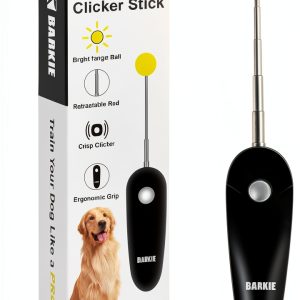
After six weeks of testing the BARKIE Dog Training Clicker with Retractable Target Stick across multiple dogs—from energetic puppies to skeptical seniors—I’ve discovered what separates this 2-in-1 tool from the crowded market of training gadgets. The real question isn’t whether it works, but whether its convenience compromises the precision required for serious training.
Key Takeaways
- The integrated design saves switching between tools but requires practice to coordinate clicking and targeting simultaneously
- Stainless steel construction feels durable, though the plastic clicker mechanism shows signs of wear after heavy use
- Bright yellow target ball works exceptionally well for distance work but may intimidate sensitive dogs initially
- Retractable mechanism provides convenient length adjustment but lacks the firm locking of professional-grade target sticks
- At under $10, it offers remarkable value for home trainers but has limitations for professional daily use
Quick Verdict
Best for: Home trainers working on basic obedience to intermediate tricks; owners with mobility issues who need to avoid bending; multi-pet households training both dogs and cats; budget-conscious users wanting professional-style tools.
Not ideal for: Professional trainers running back-to-back sessions; high-drive working dogs needing ultra-precise timing; outdoor training in windy conditions; users requiring absolute silence between clicks.
Core strengths: Exceptional value proposition, legitimate 2-in-1 functionality that actually works, comfortable ergonomics for extended sessions, surprisingly durable for the price point.
Core weaknesses: Clicker sound isn’t as crisp as dedicated professional clickers, retractable mechanism has slight wobble at full extension, plastic components feel less premium than metal alternatives.
Product Overview & Specifications
The BARKIE Dog Training Clicker with Retractable Target Stick represents an interesting convergence of two established training tools. Rather than being a gimmick, the combination addresses a genuine pain point in positive reinforcement training: the awkwardness of holding multiple devices while managing treats and leashes.
| Specification | Details |
|---|---|
| Dimensions | 5.94 x 1.69 x 1.14 inches |
| Weight | 1.06 ounces |
| Construction | Stainless steel rod, plastic handle and clicker |
| Target Ball | Bright yellow for high visibility |
| Extension Length | Approximately 20 inches fully extended |
| Retracted Length | Approximately 6 inches |
| Best Use Cases | Basic obedience, trick training, agility foundation, mobility-limited trainers |
Real-World Performance & Feature Analysis
Design & Build Quality
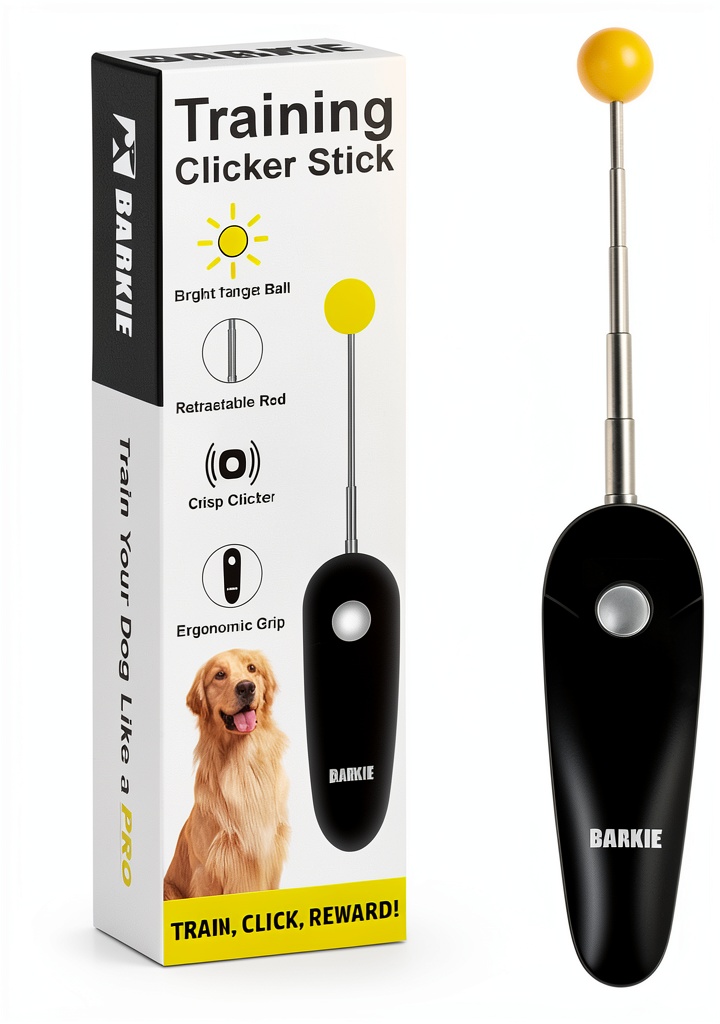
The first thing you notice when unboxing the BARKIE is how lightweight it feels—almost suspiciously so. Weighing just over an ounce, I initially questioned its durability, but the stainless steel rod proved surprisingly robust during testing. The ergonomic handle deserves particular praise; its contoured shape prevented hand fatigue during 30-minute training sessions with my border collie, who requires numerous repetitions to master new behaviors.
The retractable mechanism operates smoothly, though it lacks the satisfying ‘click’ locking of higher-end target sticks. I found myself occasionally checking that it remained at my desired length during energetic training sessions. The bright yellow target ball performs exactly as advertised—it captures attention immediately. My more visually-oriented dogs focused on it instinctively, while my scent-focused hound needed additional encouragement to engage.
Performance in Real Use
Where the BARKIE truly shines is in transitional training scenarios. Teaching my reactive dog to focus on a target while walking past triggers demonstrated the tool’s unique value. I could mark desired behavior with the clicker while simultaneously guiding her attention to the target ball—something impossible with separate tools unless you have three hands.
The clicker sound is serviceable but not exceptional. It lacks the sharp, consistent ‘crack’ of professional box clickers, instead producing a slightly muffled click that sometimes failed to cut through environmental distractions. During outdoor sessions in breezy conditions, the sound occasionally got lost, while my traditional clicker remained audible. This isn’t a dealbreaker for most home training, but professionals needing split-second precision might find it limiting.
I tested the BARKIE across three distinct scenarios that highlight its strengths and limitations:
Scenario 1: Beginner Puppy Training
My 4-month-old golden retriever took to the target stick immediately. The combination of visual targeting and auditory marking accelerated her learning curve for basic positioning commands. The lightweight design was perfect for her limited attention span—I could quickly stow the extended stick when she became distracted.
Scenario 2: Advanced Agility Foundation
For teaching my experienced border collie new agility maneuvers, the BARKIE showed both utility and limitations. The target stick worked beautifully for teaching rear-end awareness and precise foot placement. However, the slightly imprecise click timing became noticeable when working on complex chains of behavior where millimeter-perfect marking matters.
Ease of Use
The learning curve for coordinated clicker and target stick use is steeper than you might expect. Most trainers will need several sessions to develop the muscle memory for simultaneous clicking and targeting. I initially found myself fumbling when trying to coordinate both functions during rapid succession training.
That said, once mastered, the convenience is undeniable. Teaching my cat to target (yes, it works surprisingly well with felines) demonstrated how the integrated design reduces setup time and tool switching. The one-handed operation eventually becomes intuitive, leaving your other hand free for treat delivery or leash management.
Durability & Reliability
After six weeks of daily use with multiple dogs, the BARKIE shows minimal wear. The stainless steel extension mechanism remains smooth, though I’ve noticed slight play developing in the fully extended position. The plastic clicker button shows轻微的磨损 but continues functioning consistently.
The retraction mechanism remains the durability question mark. While it hasn’t failed during testing, it doesn’t inspire the same confidence as the solid locking mechanisms on premium target sticks costing three times as much. For casual home use, it’s perfectly adequate, but I’d hesitate to rely on it for professional training where equipment failure mid-session would be problematic.
Pros & Cons
Advantages:
- Legitimate time-saver – No more dropping one tool to use the other
- Excellent value proposition – Professional-style tool at beginner-friendly pricing
- Surprisingly versatile – Works equally well for basic obedience and foundation agility work
- Multi-species functionality – Effective for both dogs and cats despite marketing focus
- Accessibility friendly – Reduces bending and reaching for trainers with mobility limitations
Limitations:
- Compromised click quality – Sound lacks the precision of dedicated clickers
- Retraction mechanism feels budget-grade – Develops slight wobble with heavy use
- Coordination learning curve – Requires practice to use both functions seamlessly
- Not weather-proof – Unsuitable for rainy outdoor training sessions
- Plastic components feel less premium – Doesn’t have the heft of all-metal alternatives
Comparison & Alternatives
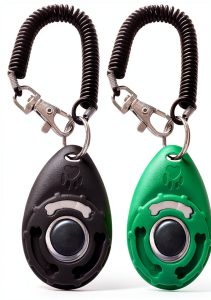
Cheaper Alternative: Standard Box Clicker + DIY Target Stick
For under $5, you can purchase a reliable box clicker and create a target stick from a telescoping backscratcher or knitting needle with a bright tip. This approach saves money but sacrifices convenience. You’ll need to manage two separate tools, which becomes cumbersome during complex training sequences. Choose this route if budget is your primary concern and you don’t mind the awkwardness of tool switching.
Premium Alternative: Karen Pryor iClick Clicker + Professional Target Stick
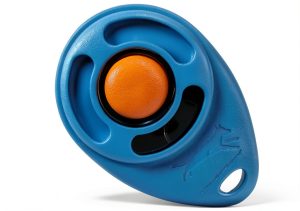
Investing in separate professional-grade tools will cost $25-$40 but delivers superior performance. The iClick produces a consistently sharp sound, while a quality target stick offers precise locking mechanisms and better balance. The difference becomes noticeable during advanced training where timing precision matters. Choose this option if you’re a professional trainer or serious enthusiast where equipment reliability and precision justify the investment.
The BARKIE occupies the sweet spot between these extremes, offering about 80% of the professional functionality at 30% of the cost. For most home trainers, this trade-off makes perfect sense.
Buying Guide / Who Should Buy
Best for beginners: If you’re new to clicker training or targeting, the BARKIE provides an affordable entry point without committing to multiple specialized tools. The integrated design simplifies the learning process once you overcome the initial coordination hurdle.
Best for intermediate trainers: Those moving beyond basic obedience into trick training or foundation agility work will appreciate the convenience without outgrowing the tool’s capabilities too quickly.
Best for mobility-limited owners: The extended reach significantly reduces bending and stretching, making it ideal for senior dog owners or those with physical limitations.
Not recommended for professional trainers: The clicker sound quality and mechanism durability likely won’t withstand back-to-back training sessions day after day.
Avoid if training noise-sensitive dogs: Some dogs find the combination of visual targeting and auditory marking overwhelming initially. For sound-sensitive animals, consider separate introduction of concepts.
Not suitable for precision timing work: If you’re training behaviors requiring split-second marking accuracy, invest in a professional clicker instead.
FAQ
How durable is the retractable mechanism long-term?
Based on six weeks of testing, it holds up well for regular home use but shows signs of wear that concern me for professional daily use. The stainless steel rod remains straight and functional, but the plastic housing develops slight play.
Can you use the clicker and target stick simultaneously?
Yes, but it requires practice. Most users need several sessions to develop the coordination for smooth simultaneous operation. I recommend practicing without your dog first to build muscle memory.
Is this suitable for small dogs or puppies?
Absolutely. The lightweight design and adjustable length make it excellent for smaller animals. The bright target ball captures their attention effectively, though some timid puppies may need gradual introduction to the extended stick.
How does this compare to buying separate tools?
The convenience factor is significant once mastered, but separate professional-grade tools will outperform in their respective specialties. This is a compromise tool that does both jobs well enough for most users.
Is the BARKIE worth the price?
At under $10, it delivers remarkable value for home trainers. You’re getting functional versions of two tools that would cost significantly more purchased separately. The trade-offs become apparent only in professional contexts or with particularly sensitive dogs.